Entry #30 – More of What I’ve Been Listening to Lately (a.k.a At least one entry per month, dammit!)

So there’s been another lengthy gap between now and my last entry. Unfortunately, I’ve ended up having one of those months. Nothing depressing or anything like that, but quite hectic; it all started off with a nice holiday in Sussex seeing family for the first time in nearly a year, then I returned home and had to slog through some admin and technical issues trying to sort out a course I’m starting in September. I’ve also had to say bye for now to my best mate as he has moved to Sheffield, and my Dad had an operation to remove a cancerous mole on his leg (He’s doing a lot better now). As well as that, I’ve been stuck in that everlong battle between me and procrastination. Oh, and I went to Leeds for a day out with someone I met online.

You know, the usual kind of June.

So yeah, that’s kind of why we have suffered a bit of a schedule slip on A-Side Glance. However, in order to make sure that I get at least one entry done this month, allow me to bring you another round of music that I have been listening to as of late.

Paul Weller – Heavy Soul

A weekend or two ago I went to work with the intention of stopping at a nearby Asda to get some stuff for dinner. Then plans changed and I ended up spending half an hour in the staff room waiting to start my shift. To pass the time I booted up my Spotify and went to choose an album to listen to, settling on Paul Weller’s fourth solo effort, Heavy Soul.

Definitely a more hard hitting sequel to the comparatively relaxing soft rock of Stanley Road, Heavy Soul is more primarily focused on guitar work with dabblings of blues here and there. Peacock Suit, the lead single, is a particular highlight as we hear Weller turning back to his time in The Jam, not just with the subject matter stemming from his Mod roots, but with the guitars that give the sense of being a wee bit pissed off. More traditional bluesy tunes like Up in Suzes’ Room are very welcome aswell.

However, being so heavily focused on guitars causes Heavy Soul to run the risk of sounding samey and one-dimensional, not helped by the fact that Paul seems a little less inspired at this point as his songs aren’t really up to much. While the aforementioned Peacock Suit and Driving Nowhere were both welcome additions to the playlist, there wasn’t really much in the way of standout Paul Weller classics. I feel like Heavy Soul would probably be better appreciated when translated to the stage; I can imagine songs like Brushed sounding fab live.

Not the greatest entry in the Modfather’s catalogue, but good for what I wanted it to be at that particular point in time as I waited to start work – Something to pass the time.

Jamiroquai – Virtual Insanity

During my holiday in Sussex, I was going through one particular warm and stuffy evening when I decided to give some acid jazz a go. I’d been interested in this genre since revisiting the soundtrack to Ridge Racer Type 4, in particular the wonderfully serene track Pearl Blue Soul. When I hopped on Google to see where would be a good place to start, I ended up being recommended Jamiroquai (Whom I later discovered was a favourite of my uncle’s back in the day. We have good taste in the family).

And Virtual Insanity is a very groovy track, innit? Wonderfully catchy and good for a dicky-dance in the living room or a headbop in the car. But if you take the time to look closer you hear a song that ages like a fine wine. As the title may indicate, Virtual Insanity talks about the growing dissociation between humans and the Earth. While the tune and Jay Kay’s style of singing may indicate otherwise, it’s very much a dour and cynical song as the narrator laments in the chorus that the “Future’s made of virtual insanity now/Always seem to be governed by this love we have/For useless, twisting, our new technology”.

And he’s right. This song was made in 1996. How deeply integrated into the virtual world are we now in 2021, with smartphones and computers, algorithms trying to dictate what we read on the Internet, on the eve of cars that can drive themselves for crying out loud? So far ahead of its time, but trapped in a more niche genre, Virtual Insanity is a song that very much can and very much should be listened to more often.

Muse – Supermassive Black Hole

Whilst Euro 2020 has been happening I have been running a feature on my radio show on Spark Sunderland, where I play songs from old FIFA soundtracks to get listeners into the footballing mood. Doing so has allowed me to play tracks from bands such as Blur, Oasis, Gorillaz, The Jam, Apollo 440, New Order, the Vaccines (Because God knows you need to hear from them during the pandemic), the Enemy, Foals, and most recently Muse.

Muse is a band that I have had on my ‘need-to-hear’ list for quite a while now but haven’t gotten round to yet. Doing the FIFA theme helped me finally give them a shot as what appears to be their signature song was used as part of the soundtrack to FIFA 06.

And I have to say, it’s not half bad. Upon hearing the opening gritty guitar line you know you’re in for a good few minutes of music. The lyrics are not entirely my cup of tea though; very poppy as Matt Bellamy muses (Sorry, couldn’t resist) about a lady in his life, and harping on constantly about melting glaciers does start to grate on me towards the end. It takes me back to listening to Head Music honestly; if you told me that this was originally a song Suede made in the late 90s then I would easily have believed you. As I say, there’s the filthy guitar line, as well as the ear worm of a dance-electronica beat, and the two match to create a tune that will stick in your head for a good few hours at least. It’s very reminiscent of songs like Electricity and Can’t Get Enough.

As a guy who is incredibly cynical to the modern-day popscene and its overabundance of love songs, I can appreciate it when pop is done differently, and getting an alt-rock spin on things here is a nice change of pace. It doesn’t make me want to immediately listen to more Muse but it is enough to retain my curiosity for now.

Ok there you go, that’s a bit of what I’ve been listening to lately. Going to get back into the swing of things in July starting with a double bill from The La’s. A band who only released the one album. Stick around, you’ll find out what I mean soon enough.

Entry #29 – Urban Hymns (a.k.a One Last Hurrah)

Urban Hymns [Remastered] by The Verve | Album Review

I’ve actually been in the presence of Richard Ashcroft. The final days of the 20th century, around Christmas ‘99, in Oxford Street, doing a bit of shopping with my Mum pushing me around in my pram. He just happened to be there, with an air of ‘Do you know who I am?’ about him. Not actually saying it out loud, but acting a wee bit cocky. Now if this was in a bar or something like that then fair enough, after all he had just come away from releasing Urban Hymns. But this was in Mothercare. Mums and bairns don’t really give a toss if you’re a rockstar in Mothercare.

Anyway, that’s besides the point.

The Verve have had a rocky history from what I have gathered. After their sophomore effort A Northern Soul was released in 1995, Ashcroft broke up the band out of nowhere. He quickly went back on this but it created a rift between himself and guitarist Nick McCabe, who did not return. Instead he was replaced very briefly by former Suede guitarist Bernard Butler (And frankly I am fascinated by the idea of a mesh of the music of the Verve and Suede), and then by Simon Tong, who would later go on tour with Blur to fill in for Graham Coxon during the Think Tank era. McCabe would eventually return, teaming up with Tong as the band worked on their third album.

Recording of Urban Hymns took place from late ’96 onwards when Britpop, while still a thing, was in its autumn days. The hype around Suede’s Coming Up was just beginning to wane and then come 1997 the genre would be gradually broken down, first by Blur, then OK Computer, and then of course Be Here Now. Therefore, Urban Hymns is typically classed as the last pure Britpop record as dance groups and boybands began to get a stranglehold on the UK charts, and This is Hardcore put the final nail in the coffin. Here’s hoping it went out with a bang rather than a whimper, eh?

Track #1 – Bitter Sweet Symphony

We’ve all heard it. We all know it. We all love it. I do to. I have nothing new to say about this masterclass of music other than a hearty f*ck you to Allen Klein. Listen to it and then we’ll get on with the second track.

Track #2 – Sonnet

After those infamous strings which dominate the first track, it’s refreshing to hear a more guitar-based follow-up. We get to hear McCabe’s signature psychedelic wibbly-wobbly guitar lines peppered throughout, which along with Ashcroft’s decent vocal work bring this just above a grade of standard. Not a spectacular song to be honest, but I do love the story behind its status as a single; the Verve’s record label wanted another single, the band didn’t, the label insisted, so the band sabotaged its release by releasing it as part of a quartet of 12-inch records. It couldn’t chart as a result. Well played.

Track #3 – The Rolling People

Love the mysterious opening to this one, those scratches of the guitar strings sounding like a heartbeat is fantastic. Very much a precursor to the next song, The Rolling People feels like a night out for a guy addicted to pills and thrills, and we get an impression of such a night as the song continues and reaches a manic and borderline uncontrolled conclusion. I’d have been tempted to have this be a single instead of Sonnet but c’est la vie.

Track #4 – The Drugs Don’t Work

And here’s the comedown. Drug use and 90s bands are like bread and butter. The Verve were no exception, leading to Ashcroft penning this song during the Northern Soul days. And knowing you’re going to inevitably see the faces of those you’ve loved and lost just adds to the futility of addiction. It’s a mesmerizingly beautiful and heartbreaking song, and you can tell Ashcroft is singing from the heart here.

Track #5 – Catching the Butterfly

It’s at this point in Urban Hymns I start to get a little concerned about the pacing; this is only song number five of thirteen total, and by the time it’s over we’re already about half an hour in. However, I’m still along for the ride for now with this song which feels like an evolution from a jam session (Indeed, the whining noises remind me of The National Anthem from Kid A). Appearing less clinical helps Catching the Butterfly stand out, as does the drumwork from Peter Salisbury.

Track #6 – Neon Wilderness

The Verve have always had an undercurrent of space opera about them and that well and truly rears its head here, in a song about getting away from troubles. Where better to go to escape them than the far reaches of the big black?

Track #7 – Space And Time

Guest starring Liam Gallagher and his clapping hands (Although not getting him to play his tambourine was a missed opportunity). On the surface this song appears to be one about a couple whose relationship is failing, as they drift apart and argue constantly. But I think it’s more than that. I feel like this is a song from Ashcroft reaching out to McCabe, acknowledging their fraught friendship and despairing over it.

Track #8 – Weeping Willow

Depression is a poison, and you need that special someone to be the cure. Or at the very least an antibiotic…

Track #9 – Lucky Man

…And when you get that cure, you get a song like this. Lucky Man is an absolute masterpiece. If you ever need cheering up, especially in these tumultuous times, spare some time for this. You never quite realise how lucky you are sometimes, and it’s nice, if not essential, to be reminded. As an aside, I am loving this recurring theme of flip sides of the coin from Ashcroft; first the drugs with tracks four and five, now mental health with Weeping Willow and Lucky Man. It’s interesting to watch the same topic be tackled twice, you don’t see it that often. It’s the first time for me at any rate.

Track #10 – One Day

We’re still hovering around the topic of depression, but One Day translates it into hard times which will eventually pass. This track is host to some of the most beautiful lyrics on the album, such as ‘You’ve been swimming in the lonely sea/With no company’ and ‘You’ve got to tie yourself to the mast, my friend/And the storm will end’.

Track #11 – This Time

And now we’re at regret. We’re covering a lot of those ‘downer’ emotions in this second half of the album. Once again, Ashcroft looks back on the split of the band and how he built up a bit of acrimony between himself and his colleagues, especially McCabe. Nice sentiment, and we get a suitably melancholy song to boot, but this is starting to make me think this is turning into more a Richard Ashcroft album than a Verve album. After all that was the original intention before he got them all back together. It feels like he is gradually letting them go across the album instead of suddenly telling them to f*ck off like last time.

Track #12 – Velvet Morning

I feel like we’re stuck treading around already covered ground. You can only sing about the same so many times in a row, and it would be nice to hear a song that isn’t rooted in Richard’s mental health troubles. It’s here that I realise pacing has yet again become an issue and that the album has slowed right down. Velvet Morning is a fine song, don’t get me wrong, and ‘I was born a damaged little man’ is a powerful line. It just all feels same old, same old at this point.

Track #13 – Come On

And again. The only way this stands out is because it feels like the band has woken up and we get one last gasp of full blown guitar riffs, just to remind you it’s definitely a Verve album. Oh, and Liam’s in the background again. Come On is a good way to round things off though (I know Deep Freeze, the hidden track, is the real end coda but I don’t have anything to say about it). After milking the downer theme dry, Ashcroft stands up, sings, then growls, and concludes with a literal ‘f*ck you!’ to his troubles. I guess in hindsight that’s what depression does; what should be minutes feels like days until eventually you come out the other side, determined. And life goes on until you circle back around.

Conclusion:

If we’re being honest this isn’t really a Verve album. This is more or less Richard Ashcroft’s solo debut that he just happened to do with his old bandmates. But he was right to realise that he could never have made this half as magical without them. McCabe, Salisbury, Tong, all help elevate the majority of this album massively. I don’t know if I can class this as their magnum opus seeing as I still have yet to listen to a chunk of A Northern Soul and the whole of A Storm in Heaven and Forth, but I think it’s safe to say they have some tough competition.

Urban Hymns is not a perfect album by any means. It has a tendency to drag, especially during the second half once we’re past the peak that is Lucky Man. But when it gets going, it is lightning gold, and there are some songs that may be 5 minutes or more that you just do not want to end. And if there’s one thing that I cannot deny about every single song on the playlist, it’s that they are chock full of emotion and heart. A lot of care has gone into them and it shows. So yeah, as what is commonly perceived as the final chapter in the Britpop book, it is a fabulous finale and I highly recommend it.

You know, going into this and having only really paid close attention to the Verve’s singles, I never actually used to rate Richard Ashcroft as a singer-songwriter. But now that I’ve waded through the Thom Yorkes, the Damon Albarns and the Jarvis Cockers of my playlists, I can safely say that Richard certainly has a way with words and his songs are nothing to be sniffed at. Still not good enough to warrant a ‘Do you know who I am?’ attitude in Mothercare, but regardless.

Entry #28 – Eurovision 2021 (a.k.a From Bad to Worse to Amanda Holden)

Just a quick off-the-cuff entry here before I bring you a review of Urban Hymns later this week. This past Saturday brought us the long-awaited grand return of the Eurovision Song Contest, after the pandemic forced it to take a hiatus last year. And believe it or not this was the first time I have fully paid attention to the event, watched all the acts, soaked in the camp and felt right in my opinions as I judged from the comfort of the sofa. It was a fun night in the end, and there were acts that stuck out like a sore thumb across the evening, and not all for the right reasons. Here, I want to leave my thoughts on a few of the highlights and lowlights from Saturday night. Starting with the obvious one…

UK – Embers by James Newman:

Oh, James. James, James, James. You tried. But I’m not entirely surprised about this song getting nul puis, partially because the UK ain’t that well-liked on the world stage right now, and partially because Embers was as dull as dishwater. We desperately need something spicier next year. Just a little bit of variation, a song that isn’t a song for the sake of being a song. Something with a bit of heart in it. And of course, we can’t go on without noting that the night was terrible for the Brits and Amanda Holden was the cream on the fecal cake. After she showed her face I’m not surprised the UK ended up with nowt.

Italy – ZITTI E BUONI by Måneskin:

This was a pleasant surprise, I like me a bit of glam rock being a Suede fan and all. Also, did the guitarist remind anyone of Suzi Quatro or was that just me? Anyway, I didn’t initially have Italy pegged as the winners; initially I thought it was going to go to one of the more politically charged acts like Russia or Malta. But as I said, Italy were a pleasant surprise and considering who they had to fend off in the end when the votes came rolling in, I’m glad they won.

Belgium – The Wrong Place by Hooverphonic:

Darkhorse act of the night in my opinion. While the lyrics were a little bizarre at times (Johnny Cash t-shirt?), the music and the vocals were all pretty damned good, and the darker alt-rock tone helped this one stand out. Not a Eurovision-winning number by any means but definitely worthy of a top 10 place for me, and I am actually pretty tempted to check out Hooverphonic’s other work. Watch this space.

France – Voila by Barbara Pravi:

The runner-up. And I have a feeling I’m in the minority here. Well, Barbara Pravi did give it her all and is an incredible performer, I’ll give her that. But while every single song sounded ‘European’, this one just sounded overly French. I dunno, maybe it was because my GCSE French was kicking in while this one was playing and it put me off. That or the fact that half the lyrics were just the word ‘voila’. Anyway, stellar performance, no doubt.

Switzerland – Voy a quedarme by Blas Canto:

Still questioning why this Sam Smith-lite act was in the running for the win.

Portugal – Love Is On My Side by The Black Mamba:

I loved the music behind this, it had the sound of a Shirley Bassey-style Bond song. Unfortunately the singer was not my cup of tea. In fact it even sounded like he was trying to sing like Shirley Bassey which didn’t sit well with me.

Germany – I Don’t Feel Hate by Jendrik:

Oh boy. Judging by the online response, I hope this guy meant it when he said he couldn’t feel hate. Everyone shat on this and with good reason. But I have to admit I actually found it was so bad that it was good. If cult classic shitshow films like The Room and Birdemic had a child and it was a Eurovision song, then it would be I Don’t Feel Hate. From the daft lyrics, the TikTok-style tone, the hand costume which couldn’t decide if it was a peace sign or a middle finger, and Jendrik himself getting so caught up in his act he forgot to play his ukulele…you just cannot help but laugh. It was memorable, which is more than I can say for quite a few of the night’s performances.

Azerbaijan – Mata Hari by Efendi:

If any of Eurovision 2021’s songs sounded like long-term chart mainstays then this would be it. That chorus is such an ear worm, and it was my guilty pleasure of the night. In fact it’s now in my guilty pleasure playlist on Spotify.

Iceland – 10 Years by Daði & Gagnamagnið

While I was glad that Italy were triumphant in the end, Iceland really should have won and it’s a crying shame that Covid stopped them from being able to perform this live. This is the kind of tone that Jendrik was going for but leaned far too into; not taking yourself too seriously, but not having it plastered all over your face as if to say ‘Oh look at me I’m so funny omfg rofl lmao’. They did it deadpan and that contributed massively to an excellent performance. Choreography was top notch. Again, wish they’d won.

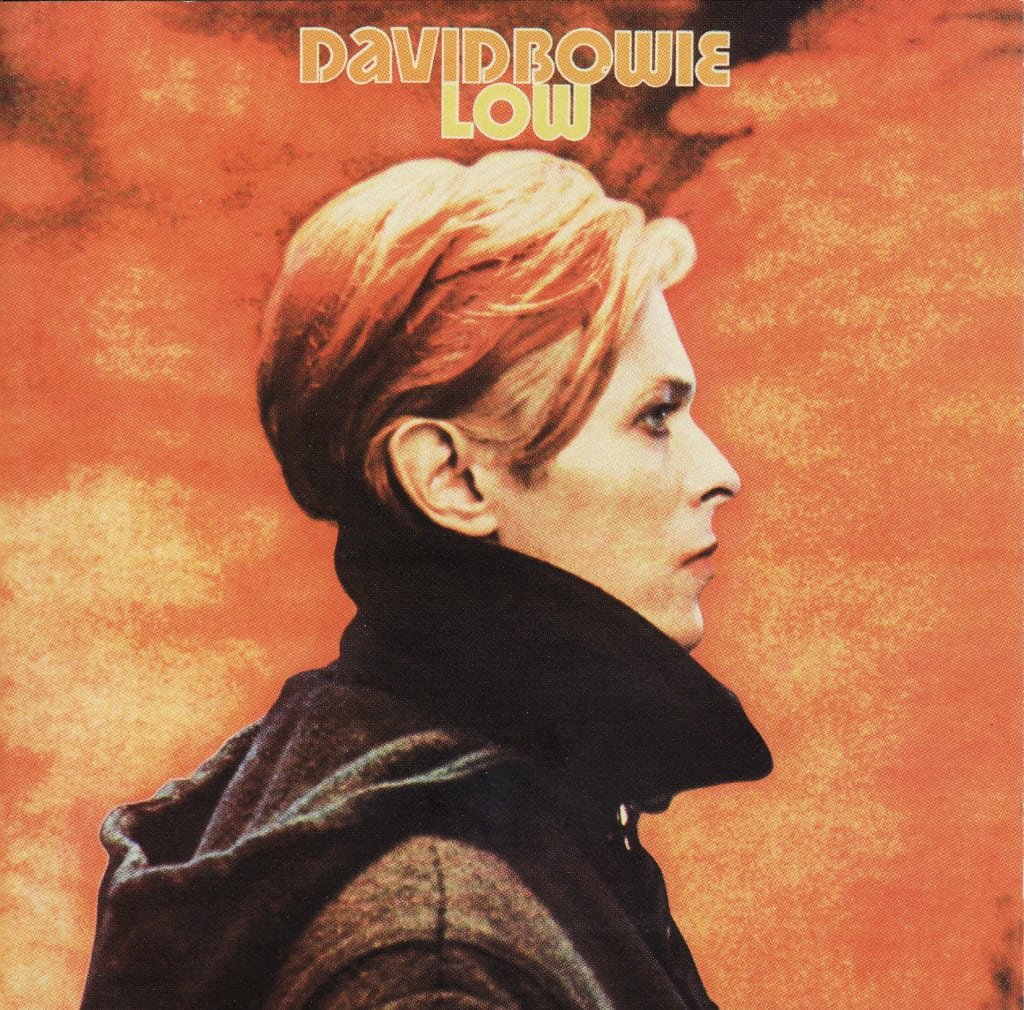
Entry #27 – Low (a.k.a Ich bin ein Bowie-er)

Image

I had promised myself that I would go at least a couple more entries before I talked about David Bowie again but then I listened to Low.

It’s a depressing fact that when an artist is going through a troubled period, nine times out of ten any material they release during that period, as well as immediately after if that material dwells on those troubles, is going to be an absolute corker. That’s been the case so far on this blog with Kid A and This is Hardcore for example. And unfortunately it was definitely the case with the inimitable Bowie. The mid-1970s saw him at his personal lowest ebb as he lost himself in a horrific cocaine addiction. His thing for alter-egos came back to bite him as he fell far too deeply into character as the Thin White Duke and the occult and fascism that came with it, and he completely lost all memory of recording Station to Station. He was on the verge of a mental breakdown and needed to bounce back pronto.

Thus he landed himself in Europe and began recording new material in an effort to detox himself, taking cues from songs he had helped compose with Iggy Pop for his solo debut The Idiot. Put simply it wasn’t the easiest of experiences for Bowie; kicking the habit isn’t something you do on a whim, his marriage was failing, and while recording at a Swiss chateau he and his crew ended up dealing with the shits at one point. Thus, we get an album built on pain and suffering but trying its damndest to see the light wherever it may be shining through.

So what first attracted me to Low specifically? Well as I said in my last entry I’ve been looking into kosmiche music as of late by the likes of Kraftwerk and Tangerine Dream. And while I said that Bowie started flirting with it in Station to Station, Low was really where it started to influence him. Therefore, considering the sessions would culminate with him moving to Berlin, making this is the first entry into his infamous Berlin Trilogy, I felt that I had to give this a shot. And I’m glad I did.

Track #1 – Speed of Life

To me this is the sound of a grand entrance on the verge of calamity. Like when an entertainer goes on stage just shy of being too pissed to perform. Right away we hear the German influences with the repetitive notes and melody, all sounding like it’s been very neatly looped together. And of course there is that unique drumbeat achieved by producer Tony Visconti, in his own words, “[f*cking] with the fabric of space and time” with his new toy, the Eventide H910 Harmoniser. Thus we get that infamous cold and machine like beat. All in all a very unwelcoming sound that tries to be welcome. You’re glad to be here for some more Bowie but you’re not sure if you feel comfortable being here. Seriously, that noise that sounds like a 1960’s Cyberman crying gives me chills.

Track #2 – Breaking Glass

Speaking of Bowie, he makes his first appearance here with a song that is short and snappy, giving the impression that it was drawn up as an instrumental with the lyrics added in later on. I’m guessing the lyrics ‘Don’t look at the carpet/I drew something awful on it’ is a reference to DukeBowie’s occult fascination. Breaking Glass doesn’t last long enough to be contemplated which I guess is kind of the point. Bowie is throwing his problems into the fire and letting them burn before they can resonate any further.

Track #3 – What in the World

A hangover from The Idiot. In fact, Iggy Pop is on this song somewhere. It’s the most normal sounding we’ve heard so far, with the avant-garde bloops and bleeps somehow managing to meld nicely with Ricky Gardiner’s guitar riffs. I think the Harmoniser-influenced drumbeats are what fuses them together.

Track #4 – Sound and Vision

This song has been etched into my head since I first heard it. It’s so damn catchy. Once again, we have another song that feels like it was tune first, lyrics later, hence we get none of the latter until we’re about a minute in. It’s also where the overarching melancholy of Low truly kicks in; it feels like the tune for a person trying to start fresh but still has that shadow looming over them. The lyrics add to that melancholy, described by Bowie as him locking himself away from the world as he tried to deal with his problems and try to get sound and vision to mean something again. Special mention aswell to Mary Hopkin, then-wife of Tony Visconti, and her doo-doo-doo-doo’s. One of the most unnecessary and yet welcome things I’ve heard on a song. Like adding an extra chocolate chip into a cookie.

Track #5 – Always Crashing in the Same Car

Bit of history behind this one. While thematically it’s about making the same mistake over and over again (Which is unfortunately relatable), it also goes back to Bowie’s LA days when he apparently rammed his car into another belonging to a drug dealer who he believed had ripped him off. Not one of my personal favourites but I like the recurring melancholic overtones and the narrator’s deadpan reflection to Jasmine (a.k.a Iggy Pop).

Track #6 – Be My Wife

More of the after effects of Bowie’s time in LA spill into the music as he alludes to his ongoing issues with then-wife Angela. Be My Wife is much more conventional than what we have heard up to this point and could be easily mistaken for a pop song dropped into a bath of art rock. The piano notes are a particular highlight here, sounding almost as machine-like and cold as the signature Low drumbeat. It’s here you really start to notice how Bowie actually lacks prominence on this album, and that the real artist behind Low is the music itself; that drumbeat is the true frontman. This will become even more apparent as we approach the second half of the album.

Track #7 – A New Career in a New Town

On the nose title referencing Bowie’s hunt for a change of pace in a rather alien environment. Simply put, this is an eerie transition piece that evokes a sun setting on the first half of the album and the moon rising over the second. As if you’re going for a night out in this new town, and all the joys and anxieties that go with it. Also, love me a bit of the ol’ harmonica.

Track #8 – Warsawza

Settle in, folks, for now the word of the day is ‘ambience’. Bowie went to Warsaw and wanted to capture its desolation with music. Having next to no lyrics is a good start. It blends beauty and spookiness with strings and synths to take you on this journey. I’ve been playing a lot of Fallout: New Vegas lately and I think this track would perfectly suit a walk through the post-apocalyptic wastelands. Any and all beauty has all but faded away, but there’s still that little bit bleeding through and leaving that one speck of hope for the future. As I say the lyrics here are limited and it’s here where Low’s selling point is established; Bowie is not the singer or the frontman or anything like that. Instead, he’s just another instrument, part of the music rather than adding to it.

Track #9 – Art Decade

The opening notes remind me of Kid A. Something tells me that without Low, that album, and indeed the genre of post-rock, would not be a thing. The intent was very much to make this a melancholic piece, reflecting on the decaying nature of West Berlin. However, there’s something more ominous about it for me frankly. I guess you could spin it round towards the fact that the decay of anything is rather frightening.

Track #10 – Weeping Wall

Scarborough Fair for the Berliner. The steady beats evoke the shadow of the Berlin Wall hanging over the city as it is all that separates one world and the next, and all the unwanteds that come from it. Seconds ticking by, dread remaining evermore thanks to the Cold War.

Track #11 – Subterraneans

The kosmiche music tribute concludes with Subterraneans, a song originally intended for a soundtrack album for Bowie’s Hollywood debut, The Man Who Fell to Earth (Which I really, really need to watch one day). While I have been flirting more with the emotions of fear and dread rather than melancholy as intended by Low, this song is a chopped onion on tape. This symbolises the sadness and the regret felt by those trapped on the east side of the Wall, separated from their old lives. The saxophones and Bowie’s distant vocals evoke a sense of remembering those days, and how much better they were. Nostalgia in the cruellest and most depressing form.

Conclusion:

To be honest, I initially considered doing this review by condensing the whole album instead of talking about each track one by one like I usually do. But I’m glad I didn’t because listening back to this album again since I first listened to it one night in April, I didn’t quite realise nor appreciate just how sad it is. This is honestly the most tearjerked I have felt since starting this blog. The melancholy really hits you on Low and drives home the point that this was the work of a man trying desperately to right himself lest he lose himself forever. While Kid A and This is Hardcore were reactions to how fame had brought Britpop-era bands to their low points, Low is a reaction to how Bowie’s own choices took him so far down. And that is much, much more effective.

It’s also a very Bowie way of doing things that instead of him singing about his troubles he lets the music speak for him instead. The first half sets up what’s going wrong in his life and the pain he is feeling, and the second half, chock-full of instrumentals, details the desolate prison he has exiled himself to for the time being. As well as that, we hear the shared expressed by the people he is living among. He can’t speak for them, he doesn’t have their voice, and it’s not like he can assume another character to pretend to be one of them lest he slip back into old habits. Thus, he lets the music do it for him. It’s a real testament to his backing musicians and Tony Visconti’s production.

Earthling was pretty good, don’t get me wrong. But Low? Low blows it out of the water. A damned fine piece of art rock, a damned fine piece of music.

Entry #26 – What I’ve Been Listening to Lately (a.k.a Oh yeah. I have a blog, don’t I?)

Hello again. Sorry I haven’t been posting much in the way of content lately. Basically April has been a curious blend of being busy and living life as close to normal as possible. The pubs are open once again and I’ve been back out with my mates twice having a good time, minus freezing our arses off on Tuesday in the post-heatwave chill (Couldn’t feel my toes afterwards. Still, worth it). I’m finally off furlough and trying to get some money back in my account. I’ve taken up walking lately aswell, going into town and back or along the seafront, getting a few miles in most days. What else, what else? Oh yeah, listening to music.

It’s been more or less the same old, same old for me as of late but that’s not to say I have completely restricted myself to my usual hunting grounds of Britpop, Madchester and what have you. I’ve been trying to have more of an open mind as of late and ever since I listened to Kid A I’ve had a bit of an interest, like Thom, in drifting away from rock and into the avant-garde. I’ve been going through bits and bobs of David Bowie’s stuff ever since I listened to Earthling and have begun to appreciate how he flirted with various genres across his career – Jungle drum and bass with Earthling, creepings of jazz in Blackstar and elements of kosmische music in Station to Station. The last one in particular caught my attention; I’ve heard things about Germany’s minimalist electronica, and wanted to give it a shot and see what I thought of it. Tried a bit of Tangerine Orange and Alpha Centauri was a good shout. But of course, if I was going to listen to that style of music then there was one song that I just had to listen to:

Kraftwerk – Autobahn

I wouldn’t quite say I like this song yet but it is growing on me. Obviously, it’s not conventional nor is it really something that I would normally listen to. But it is the front door to kosmiche music (Although from what I’ve read, Kraftwerk did pretty much grow out of the genre and become their own thing), with its minimalist bloops and bleeps melded together to create a song meant to personify the travel, traffic and general monotony on the autobahn. Maybe once I’ve finally learnt to drive and I end up going for a lengthy drive on the motorway I’ll like it more but for now I’ll appreciate it for what it is; a cool piece of music.

And while I’m at it, here’s a quick question: Ever heard of the term ‘mondegreen’? If not, it’s when you hear a song’s lyrics as something entirely different. For example, I once thought that the opening lyrics to D’You Know What I Mean? were ‘Step off the train on an unlit dawn’ (Eat your heart out, Noel), and I’ve seen another person online say they once thought the line Damon was saying over and over at the end of Beetlebum was ‘Piss on me’. It’s a weird thing, mondegreen. Anyway, like many first time listeners, I fell into the trap of thinking the lyrics to Autobahn were ‘Fun, fun, fun on the autobahn’. I was wrong, of course. And I felt like an idiot afterwards.

Frank Zappa – Peaches en Regalia

Keeping the instrumental theme going is this tune from the man who once said that nights are the best time to work for that is when the bullshit rests. Peaches en Regalia is a particular favourite of mine and has been ever since I had to talk about it for my first task in music at secondary school in Year 7. It’s got a very lush and ‘fruity’ sound to it and is one that helps cheer me up when I’m in a sour mood. Really need to listen to Hot Rats at some point…

Graham Coxon – Hard and Slow

While I love everything that Graham has done for Blur, his efforts on their self-titled album is some of his absolute finest work. Still trying to process the motor-guitar sound from Essex Dogs. But with a song like You’re So Great, as well as Coffee & TV, I knew that I had to check out his solo stuff at some point. Thus, I’ve been listening to his debut album from 1998, sandwiched between Blur and 13, titled The Sky Is Too High.

Delightfully minimalist, Hard and Slow has been a particular highlight with its intimacy similar to You’re So Great, with a fast tempo that perhaps signifies that time is going by too fast for the narrator to fully appreciate this tender moment he is sharing with a special someone. Obviously, this song doesn’t have the same flourish that Stephen Street and William Orbit would give Blur’s songs, but it’s refreshing to hear something with minimal productional polish. Adds to the intimacy.

Paul Weller – Wild Wood

One of the reviews I’ve had on the backburner for the blog has been Wild Wood, Paul Weller’s sophomore effort from 1993. It’s been about halfway done for a while now and I aim to have it out for you one day but for now I’d just like to talk about the title track which I just listened to for the first time in a while.

It’s perfect.

As a feel good song it is one of the best; quiet, elegant, reassuring and relaxing. A mostly delicate and counselling performance from Paul makes it the standout track on the album for me. Not much to say about it to be honest, I just wanted to gush about it real quick and save the full thoughts on for the review itself when I finally finish it.

So for now I’ll instead give mention to a version of the song that I just discovered the other day; the Portishead remix, titled Sheared Wood. See, trip hop is another genre that I have been having a fleeting glance at, particularly from the likes of Gorillaz, Massive Attack and, of course, Portishead, with their debut album Dummy. I’m not sure why I like it, or indeed if I do like it and may just instead be talking about it because it’s weird and new to me. But it is a fascinating mesh of the two styles, with Portishead’s keyboards, drums and electric guitars replacing the calm optimism of the original with an air of tension and caution. Cautious optimism, perfect for today. I guess you could call this a ‘night’ version of the song, when you’re on the train back home in the dead of night and the hustle and bustle are the drunks and the chavs. Could act as a nice transition into Down in the Tube Station at Midnight.